
Spain is one of Europe’s most rewarding cheese countries, with a tradition shaped by mountain pasture, dry plains, island farming and a remarkable range of sheep’s, cow’s and goat’s milk cheeses. Many of its finest cheeses are protected by PDO or PGI status, which helps preserve local breeds, methods and regional identity. The best way into Spanish cheese is through a handful of emblematic examples: Manchego, Cabrales, Torta del Casar, Idiazabal and Tetilla. Together they show just how broad the category is, from firm and nutty to smoky, creamy, blue-veined and almost spoonable. But they are by no means all of what Spain has to offer cheese lovers.
Spanish Cheese At A Glance
Spanish cheese is deeply regional. In the interior, especially Castile-La Mancha and Extremadura, sheep’s milk has long been central, producing cheeses with density, savoury depth and good keeping qualities. In the north and north-west, greener pasture and cooler conditions favour softer textures, more cow’s milk cheeses and, in some places, cave-aged blue cheeses. Goat’s milk is especially important in Mediterranean and island traditions, giving rise to bright, aromatic cheeses that can be fresh or matured.
One reason Spanish cheese can feel more distinctive than people expect is that it is not dominated by a single style. France is often associated with soft-ripened cheeses and Italy with mozzarella and grana styles; Spain, by contrast, offers a little of everything. You can eat a hard, elegant sheep’s cheese one moment, then move to a powerful mountain blue, then finish with a thistle-set cheese so soft it is spread with a spoon. That variety is one of the great pleasures of exploring it.
Protected names are worth paying attention to. PDO, or Protected Designation of Origin, generally means the cheese must come from a defined place and be made there according to regulated standards. PGI, or Protected Geographical Indication, also protects regional identity, though the rules are usually slightly broader. For shoppers, these marks are useful because they help distinguish authentic cheeses from generic imitations.
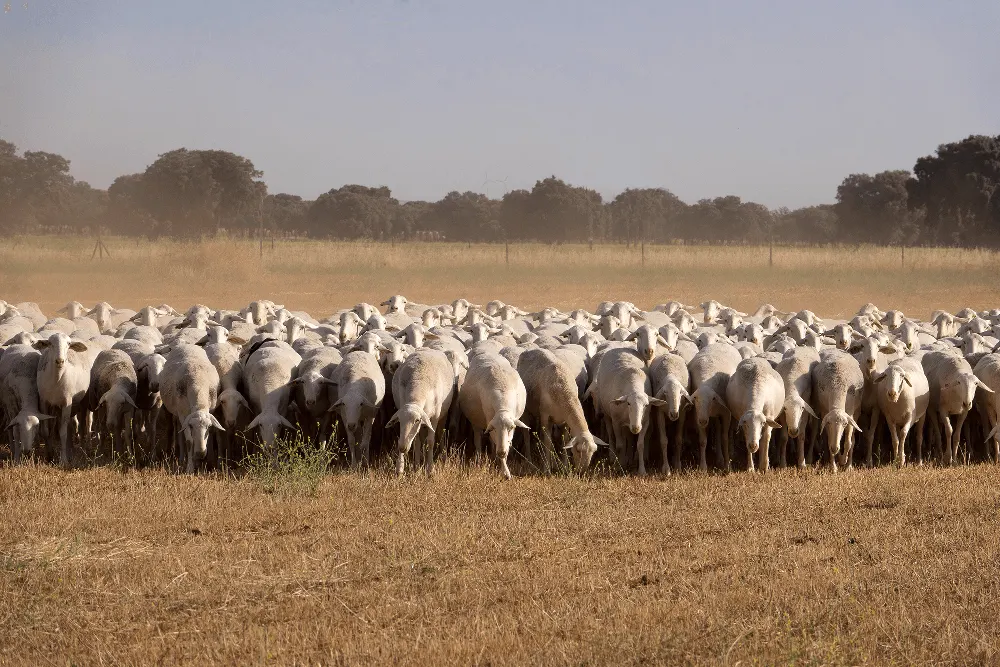
Manchega Sheep
Castille – La Mancha
Manchego
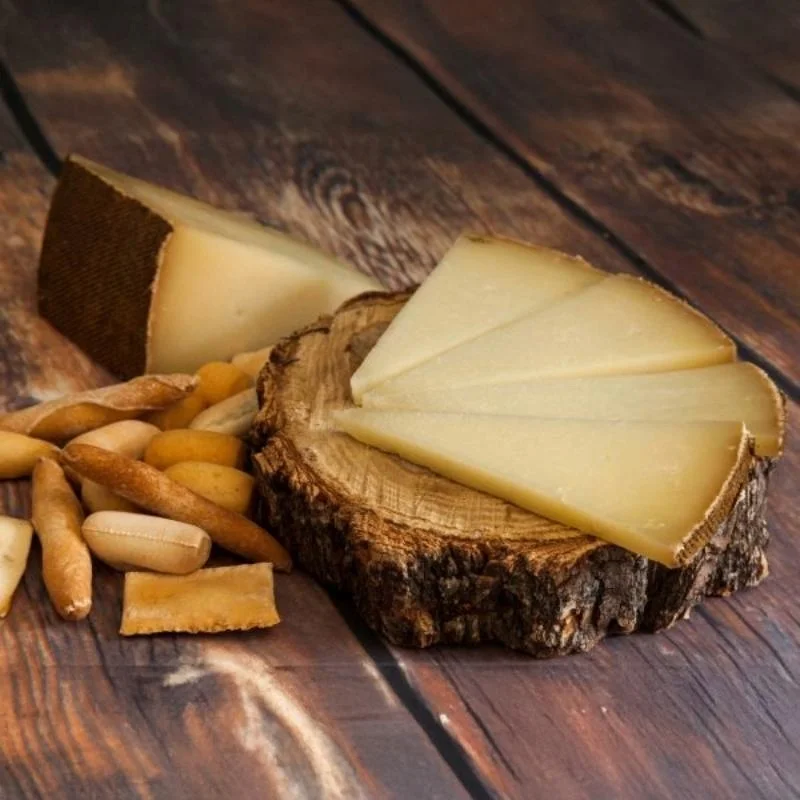
Aged Manchego
Castilla La Mancha
Cabrales
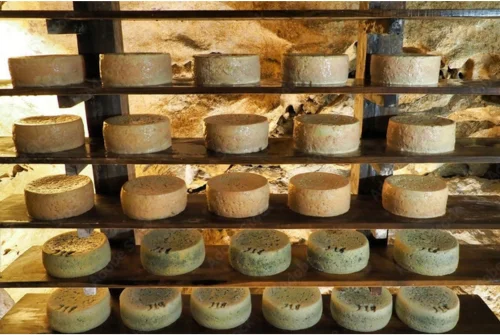
Cabrales Cheeses Curing in Cave
Asturias
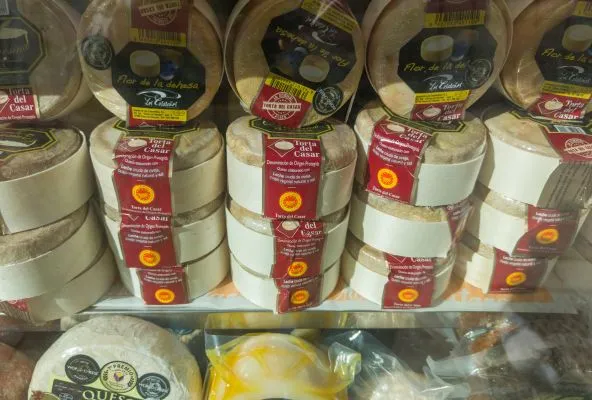
Torta del Casar
Torta del Casar, from Extremadura, is one of Spain’s great conversation cheeses. It is made from the raw milk of Merino and Entrefino sheep and set using vegetable rennet from cardoon thistle (cynara cardunculus) rather than the animal rennet more commonly used in cheesemaking. That detail matters, because it contributes to both the texture and the distinctive, slightly bitter finish.
When fully mature, Torta del Casar is not a slicing cheese. The rind holds a soft, creamy, almost liquid centre that is usually accessed by cutting off the top and scooping out the interior. It is luxurious, savoury and full-flavoured, with deep sheep’s milk richness balanced by the faint herbal bitterness associated with the thistle coagulation. The effect is unusual and memorable: rich but not flat, decadent but still lively.
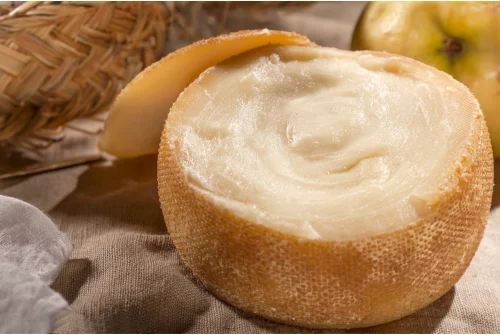
Torta del Casar
Extremadura
This is one of the best cheeses for simple serving. Good bread is often enough. Crackers, chutneys and too many accompaniments can distract from it.
A young red wine, a dry white or a glass of sparkling wine can work well, but the main point is to let the texture and flavour speak for themselves. For many visitors, Torta del Casar is the cheese that changes their idea of what Spanish cheese can be.
It also has close cousins in spirit, especially other Extremaduran sheep’s cheeses such as La Serena. If you enjoy Torta del Casar, it is worth exploring that wider family, because it reveals a distinctive regional tradition built around sheep’s milk and vegetable rennet rather than the firmer, drier sheep’s cheeses more people expect from Spain.
Idiazabal
Idiazabal is one of Spain’s finest expressions of mature sheep’s milk cheese. It comes from the Basque Country and Navarra and is traditionally made from the milk of Latxa and Carranzana sheep. The result is a firm cheese with a compact texture and a flavour profile quite different from Manchego.
Where Manchego often feels rounded, nutty and mellow, Idiazabal is more tensile and mountain-like. It can be buttery and clean when young, but matured examples often develop a concentrated savouriness with notes of toasted nuts, lanolin, herbs and sometimes smoke. Not every Idiazabal is smoked, but the smoked versions are especially celebrated and can be superb, gaining an extra aromatic layer without losing precision.
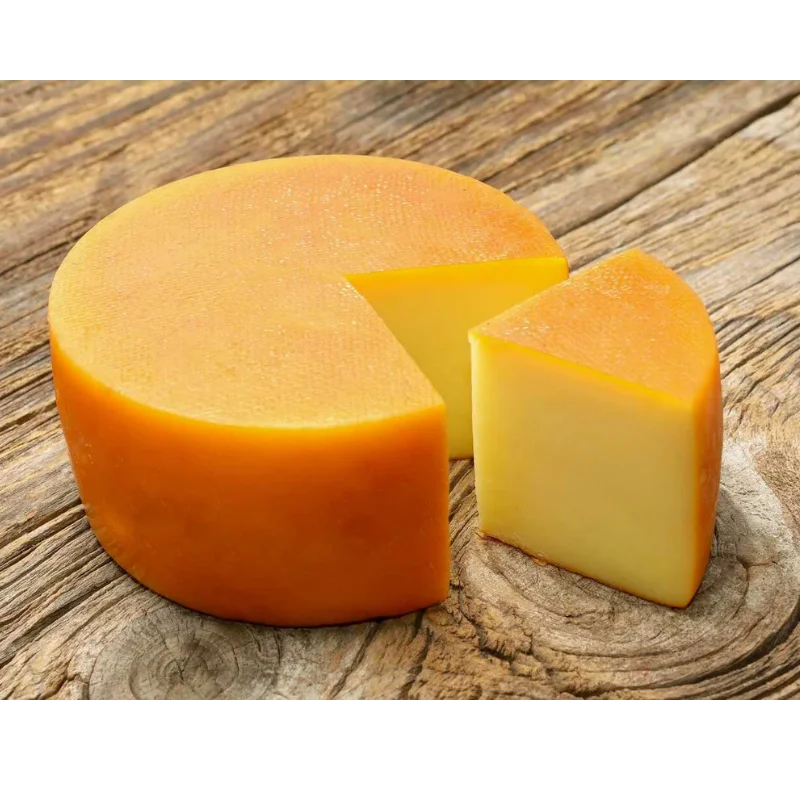
Idiazabal
Basque Country and Navarra
It is an excellent table cheese and one that rewards quiet attention. It works beautifully with crusty bread, Basque cider, dry white wine or light reds. It can also be used in cooking, but many good examples are best eaten neat so the sheep’s milk character remains clear. For anyone who likes aged cheeses with structure and a strong sense of place, Idiazabal is one of Spain’s most compelling choices.
As a comparison point, Idiazabal is useful because it shows that Spanish sheep’s cheeses are not all variations on Manchego. Both are excellent, but they come from different landscapes, breeds and traditions, and they taste different because of that. Tasting them side by side is one of the quickest ways to appreciate the range within Spanish cheese.
Tetilla
Tetilla, from Galicia, offers a very different experience. Made from cow’s milk and known for its distinctive conical or breast-like shape, it is mild, creamy and elastic in texture, with a gentle milky flavour that makes it one of Spain’s most approachable cheeses. If Cabrales is dramatic and Torta del Casar is decadent, Tetilla is soft-spoken and comforting.
Its flavour is not about intensity but balance. A good Tetilla is buttery, lightly salty and faintly tangy, with a supple paste that melts pleasantly in the mouth. It is the sort of cheese that disappears quickly at the table because it feels easy and natural to eat. That can make it sound simple, but simplicity done well is a skill in itself.
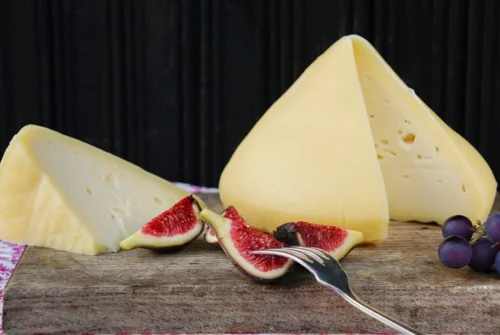
Tetilla
Galicia
Tetilla is ideal for a mixed crowd because even people who normally prefer mild cheeses tend to enjoy it. It works in sandwiches, on toast, in empanadas, or simply cut into wedges with bread. It also melts nicely, which makes it useful in everyday cooking. On a cheeseboard, it provides a valuable contrast to stronger cheeses and helps create a more balanced progression of flavours.
Tetilla corrects a common assumption that Spanish cheese is mainly hard sheep’s cheese. Galicia alone shows otherwise, with a greener, softer, more cow’s-milk-driven tradition that broadens the national picture considerably.
Other Notable Cheeses
Beyond these five, Spain has many other cheeses worth seeking out, especially among PDO and PGI names.
Mahón-Menorca is a notable cow’s milk cheese from Menorca, often buttery and salty when young and more savoury as it matures.
Majorero, from Fuerteventura, is one of Spain’s important goat’s cheeses, often lively, aromatic and marked by the island environment.
Murcia al Vino is another memorable goat’s cheese, recognisable for its rind washed in red wine.
Roncal, from Navarra, is a historic sheep’s cheese with a firm texture and assertive flavour.
La Serena, as mentioned earlier, is especially interesting for anyone drawn to soft, rich Extremaduran sheep’s cheeses.
Valdeón and Los Beyos, both PGI cheeses from northern Spain, add further breadth and show how much excellent cheese exists beyond the most famous export names.
How to taste them
A good tasting order matters. Start with Tetilla, then move to Manchego, then Idiazabal, then Torta del Casar, and finish with Cabrales. That progression moves from mild and creamy to firmer and more concentrated, then into soft richness and finally full blue intensity. Served this way, each cheese has space to show itself without overwhelming the next.
For accompaniments, restraint is usually better than excess. Bread, quince paste, almonds, walnuts and a few suitable wines or ciders are enough. Spanish cheese is most impressive when it is allowed to taste of milk, pasture, ageing and place rather than being buried under sweet relishes or heavy garnishes.
If you want to understand Spanish cheese properly, do not think of it as a single category headed by Manchego. Think of it as a map: La Mancha gives structure, Asturias gives force, Extremadura gives richness, the Basque Country gives mountain precision, and Galicia gives softness and ease. Taken together, these cheeses show a country with one of the most varied and characterful cheese traditions in Europe.
